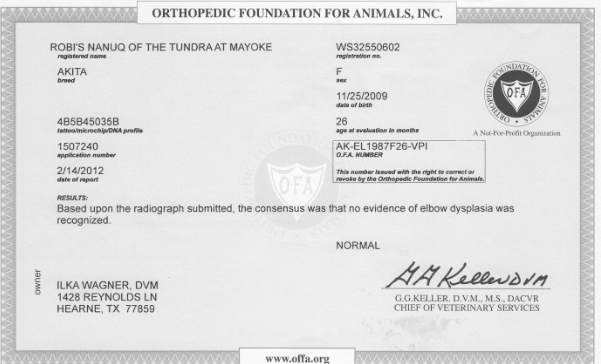
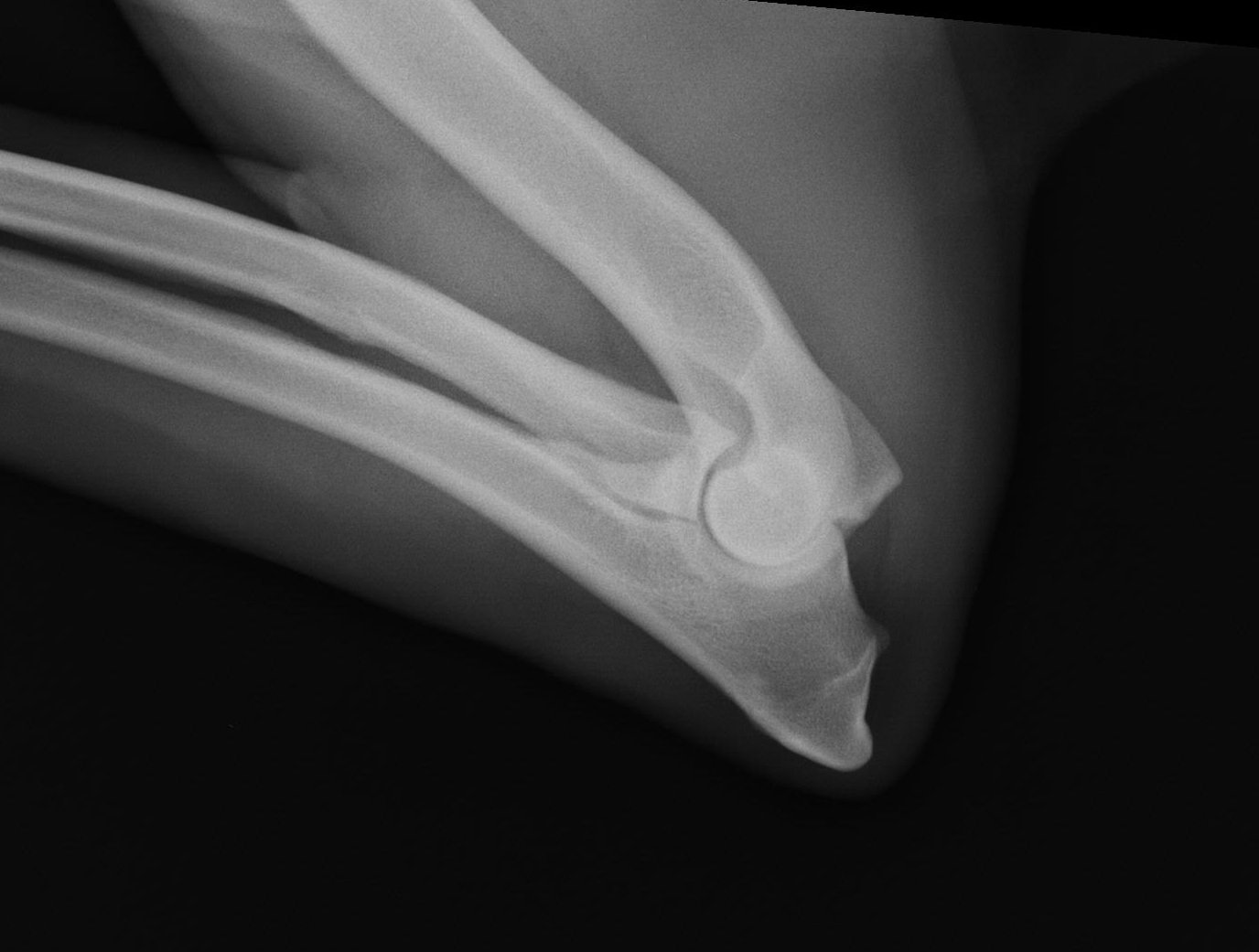
Elbow dysplasia is a syndrome of four separate developmental abnormalities that occur within the joint. These may or may not all be present in order for the diagnosis to be made. The four abnormalities include 1) ununited anconeal process, 2) osteochondritis dissecans, 3) fragmented coronoid process, and 4) joint incongruity. These are considered to be genetically inherited abnormalities. The combination of these abnormalities leads to osteoarthritis and pain as the dog ages. Many dogs are diagnosed with this prior to being a year of age.
In the Akita, this is not, at this time, considered to be part of the recommended health clearances for breeding dogs and bitches, but is considered to be optional. It is not a common occurrence in the breed, however, it does occur, and can be very painful for the dog depending on the severity of the disease. Often times the pain associated with elbow dysplasia is more difficult to control than with hip dysplasia as it is a much more complex joint. Many reputable breeders will have these radiographs done while the dog is having the hips evaluated, sending both to OFA for certification.
Unlike hip certification, where there are varying degrees of evaluation such as Excellent, Good, Fair, etc, elbows are only certified as Normal.
Links to additional information:
You can also search for the certification by following this link and using either the dog’s AKC registration number or AKC registered name: https://ofa.org/advanced-search/