What Is Bloat in Dogs?
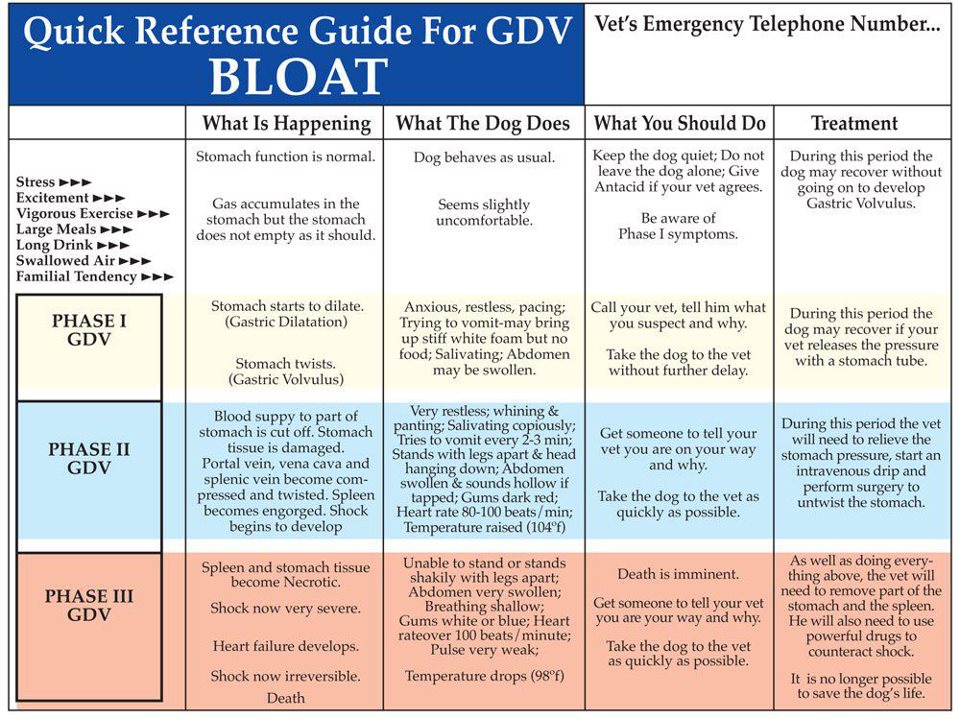
Bloat, also known as gastric dilatation-volvulus (GDV) complex, is a medical and surgical emergency.
As the stomach fills with air, pressure builds, stopping blood from the hind legs and abdomen from returning to the heart. Blood pools at the back end of the body, reducing the working blood volume and sending the dog into shock.
If this isn’t enough, there is yet another scary thing that happens, and it is devastating to see. As the stomach flips, it drags the spleen and pancreas along with it, cutting off the blood flow. The oxygen-starved pancreas produces some very toxic hormones. One, in particular, targets the heart and stops it cold. In fact, a dog can go through successful treatment and seem to be out of danger, when suddenly the heart stops.
Even in the mildest case of bloat, which is extremely rare, dogs die without treatment.
What Are the Signs of Bloat in Dogs?
- An enlargement of the dog’s abdomen
- Retching
- Salivation
- Restlessness
- An affected dog will feel pain and might whine if you press on his belly
Without treatment, in only an hour or two, your dog will likely go into shock. The heart rate will rise and the pulse will get weaker, leading to death.
For more signs, treatment & aftercare, see American College of Veterinary Surgeons >>