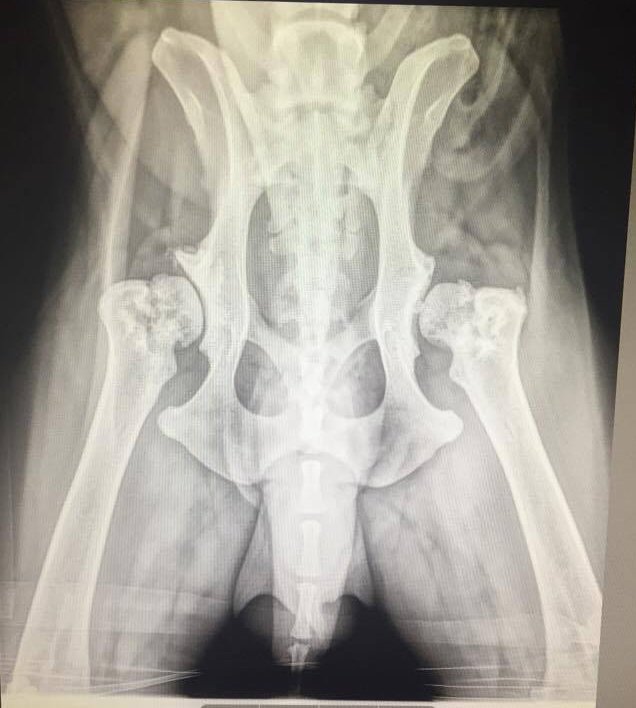
Hip dysplasia is one of the primary health concerns in most big breeds of dogs, including the Akita. Hip dysplasia is an orthopedic disorder that is described as a laxity, or looseness, in the hip joint and/or malformation of the acetabulum (region in the pelvis where the head of the femur sits) that often results in subluxation of the femoral head (top of the femur – large, upper leg bone). Over time, this will ultimately result in degenerative joint disease or arthritis.
Most dogs with hip dysplasia will show a lameness in the rear legs at a young age, often times before they are 2 years of age. However, if the dog is very fit and active with good muscling, this may go unnoticed until a later age when the arthritis develops. It is also dependent on how severe the hip dysplasia is as to how early it will cause pain for the dog.
Of note, there is a distinction between hip dysplasia and hip osteoarthritis in older dogs. Hip dysplasia is a genetic conformation that the dog is born with where there is improper fitting of the head of the femur into the hip joint. There are some thoughts that this can also be caused by improper footing and too much exercise, play or stair climbing with a young growing puppy. At this point, there is no research to prove this, however it is always a good idea to be sure your puppy has good traction on surfaces in your home, is not allowed to run up and down stairs and play too roughly while they are still developing their joints.
Hip osteoarthritis is defined as simply degenerative joint disease in the hip joint. As dogs age, especially the athletes and working dogs, they are more prone to developing arthritis in their joints. This can happen in a joint that is perfectly formed and genetically correct, just simply from the work that the dog has done in its lifetime. It would be incorrect to say that these dogs have hip dysplasia. When radiographed, these dogs will still have a properly fit femur head into the hip socket, they will just be showing signs of osteoarthritis present in the joint.
Hip dysplasia is one of the primary health clearances for breeding male and female Akitas that is recommended by the Akita Club of America (ACA). Radiographs of properly positioned hip are submitted to either the Orthopedic Foundation for Animals (OFA) or PennHip for evaluation and scoring by boarded radiologists. For more information on this, please follow the links below:
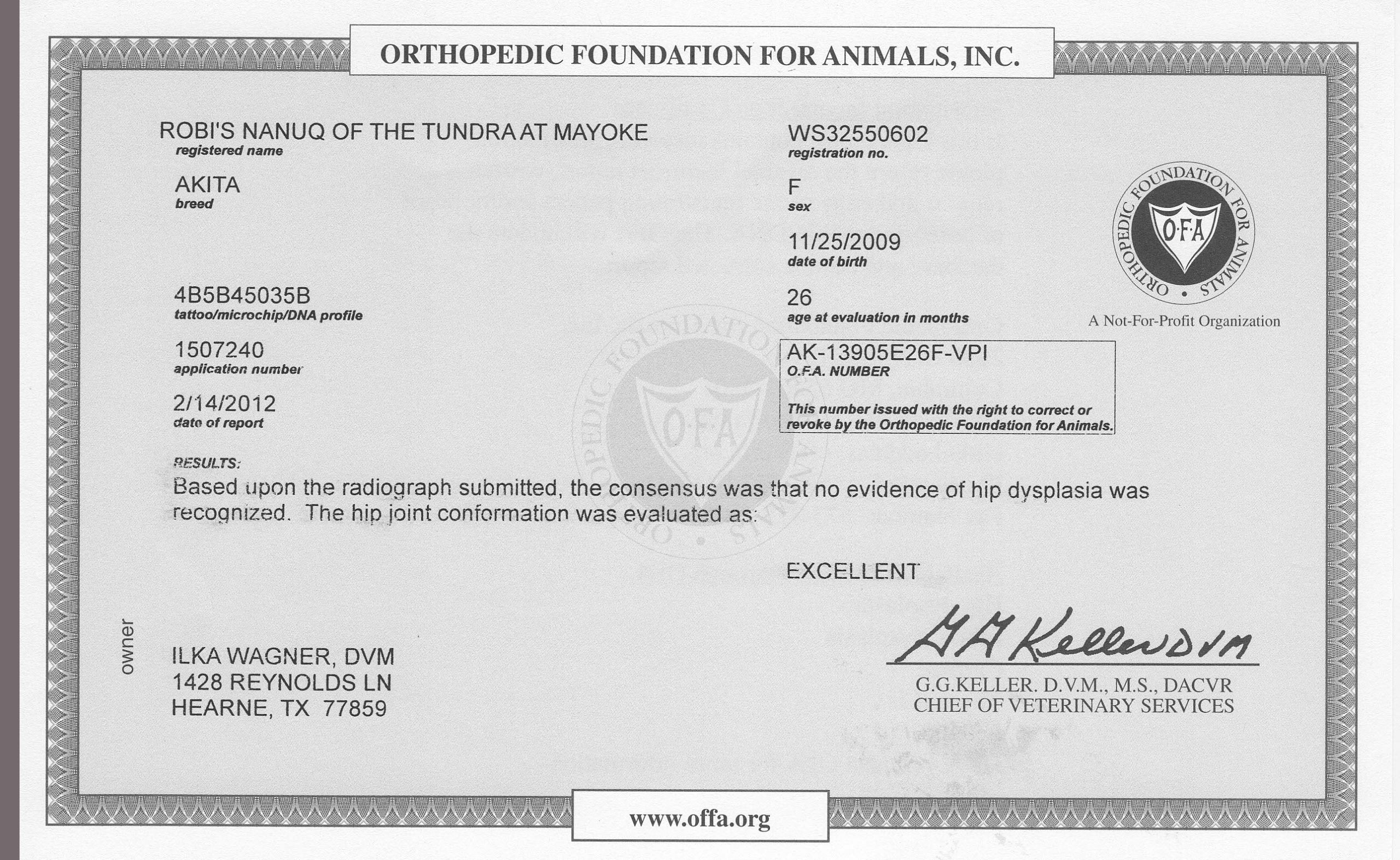
OFA: https://ofa.org/diseases/hip-dysplasia/ OFA evaluation is done once the dog has reached 24 months of age. While it can be done sooner, called preliminary OFA evaluation, it is not official and given an OFA certification number until the dog is at least 24 months of age. Passing evaluations for hips through OFA consist of Excellent, Good and Fair.
You can enter a dog’s AKC number or registered name in the OFA database and search for yourself. This is the best way to confirm that proper health testing is being done on the parents of the litter. Here is the link to follow in order to do this: https://ofa.org/advanced-search/
This site also discusses how our OFA ratings compare with those done in other parts of the world. This information is important if you are considering importing a puppy form outside of the US. For more information you can follow this link: https://ofa.org/diseases/hip-dysplasia/hip-international-ratings-matrix/